
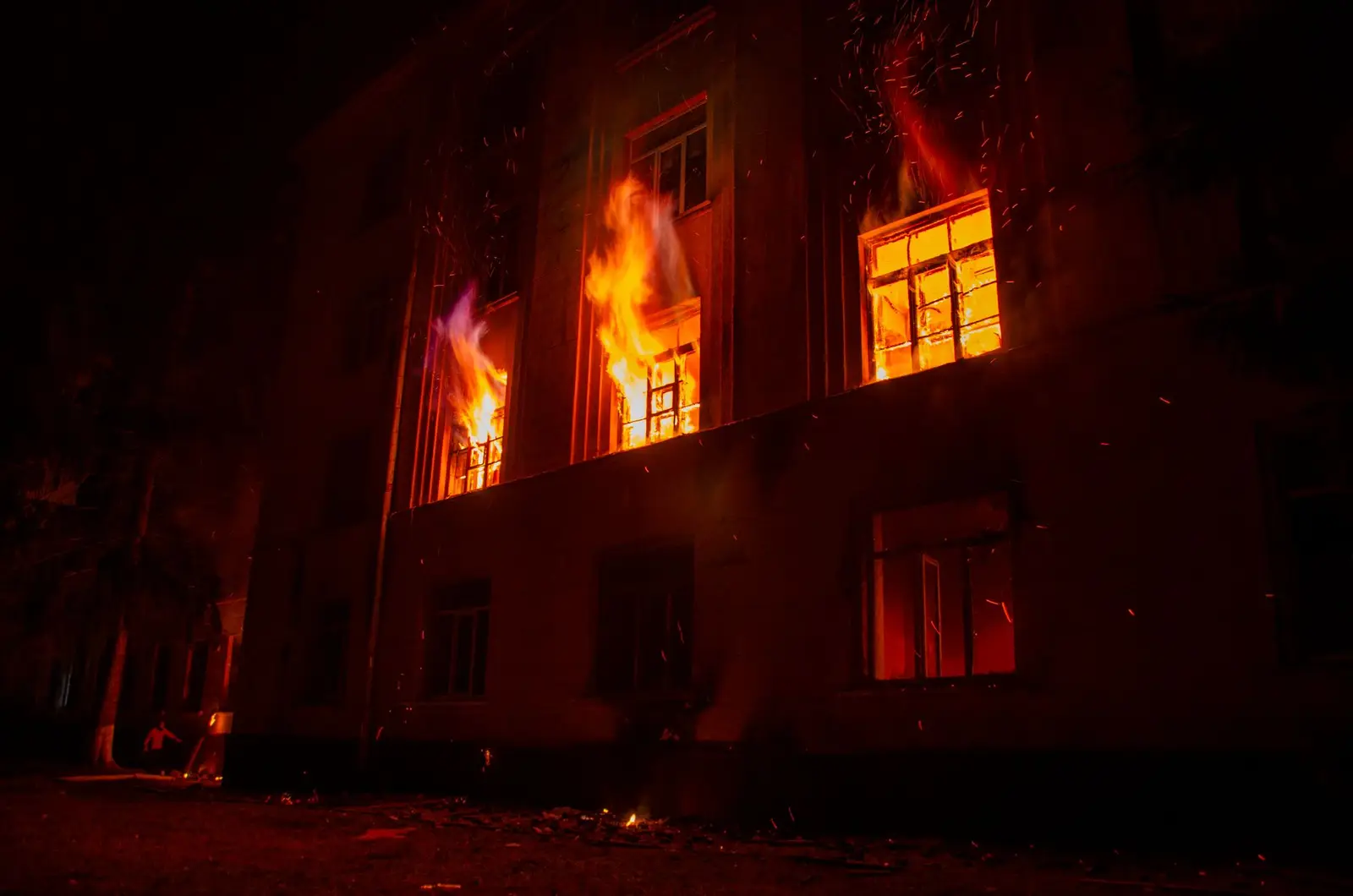
A fire claim can raise difficult questions where the scene appears to point to deliberate ignition. But a strong suspicion of arson is not, by itself, proof that the policyholder caused it or forfeited cover. In Renasa Insurance Company Limited v Watson and Another (32/2014) [2016] ZASCA 13, the Supreme Court of Appeal considered an insurer’s attempt to reject a commercial fire claim on allegations of fraud and failure to prevent the loss.
This article is general information, not legal or insurance advice. Policy wording and the evidence in each claim remain important.
The fire and the rejected claim
The insured business, Canterbury Coaters, operated a print-finishing operation in Elsies River, Cape Town. A fire severely damaged the premises. The circumstances indicated that someone had prepared an arson attack: containers holding fuel had apparently been positioned so that fuel could run over equipment.
The business owner, Mr Watson, arrived at the premises early that morning, noticed the unusual setup and the smell of petrol, and contacted the police. Renasa Insurance Company Limited nevertheless rejected the claim.
Its primary case was that Mr Watson had arranged the fire in order to claim from the insurer. It relied on the policy’s fraud or forfeiture provisions. As an alternative, Renasa argued that he had not taken reasonable steps to prevent the fire, as required under a prevention-of-loss clause.
Who had to prove what?
The central legal point was the burden of proof. Once an insured has established a claim that appears to fall within the policy, an insurer relying on an exclusion, forfeiture clause or other defence to avoid liability must prove the facts supporting that defence.
For the allegation of fraud and arson, Renasa therefore had to show, on a balance of probabilities, that Mr Watson was responsible. This is the ordinary civil standard: the insurer’s explanation must be more probable than competing reasonable explanations. It does not require proof beyond reasonable doubt, but it requires more than speculation.
Why suspicion did not establish fraud
The court accepted that the fire scene was highly suspicious and consistent with planned arson. However, it distinguished between proof that an unknown person deliberately set a fire and proof that the insured was involved.
Renasa’s experts could not establish where or how the fire was ignited. The available evidence did not sufficiently connect Mr Watson to the ignition or the preparations. The insurer’s theory also had to contend with his conduct in reporting what he saw to the police. The court regarded that conduct as inconsistent with the suggestion that he had orchestrated the event.
A possible financial motive, suspicious circumstances and unanswered questions may justify an insurer investigating closely. They do not automatically prove dishonesty by an insured. The Supreme Court of Appeal held that Renasa had not discharged its burden on the fraud defence.
The duty to take reasonable precautions
The alternative defence concerned the insured’s obligation to take reasonable steps to avoid or reduce a loss. Such clauses do not turn policyholders into guarantors against every risk. Their application depends on what a reasonable person in the insured’s position could have anticipated and done.
In this matter, the court found that Mr Watson could not reasonably have foreseen that an unidentified person would ignite the premises in the limited period after he left. Renasa did not establish that a reasonable precaution, available to him at the relevant time, would probably have prevented the fire.
The prevention-of-loss clause therefore did not provide a basis for rejecting the claim either.
Practical significance for short-term insurance
- Arson evidence is not necessarily evidence against the insured. An insurer must prove the insured’s participation or the specific policy breach it relies on.
- Fraud allegations need a coherent evidential case. Suspicion, motive and gaps in the account may matter, but they are not a substitute for proof.
- Precaution clauses have limits. The relevant question is whether reasonable, foreseeable measures could have been taken, not whether the loss could theoretically have been avoided.
- Policy wording remains important. Fraud, forfeiture, reasonable-precautions and claims-notification clauses can differ materially between policies.
- Evidence should be preserved promptly. In a serious fire, photographs, security records, witness details, fire reports and communications may be important to the claim assessment.
Key takeaway
Renasa Insurance Company Limited v Watson and Another (32/2014) [2016] ZASCA 13 confirms that repudiating a fire claim for alleged arson or fraud requires proof, not merely a plausible suspicion. It also confirms that a reasonable-precautions obligation is assessed against foreseeable risks and practical steps available at the time. The Supreme Court of Appeal dismissed Renasa’s appeal, leaving the insured successful.